
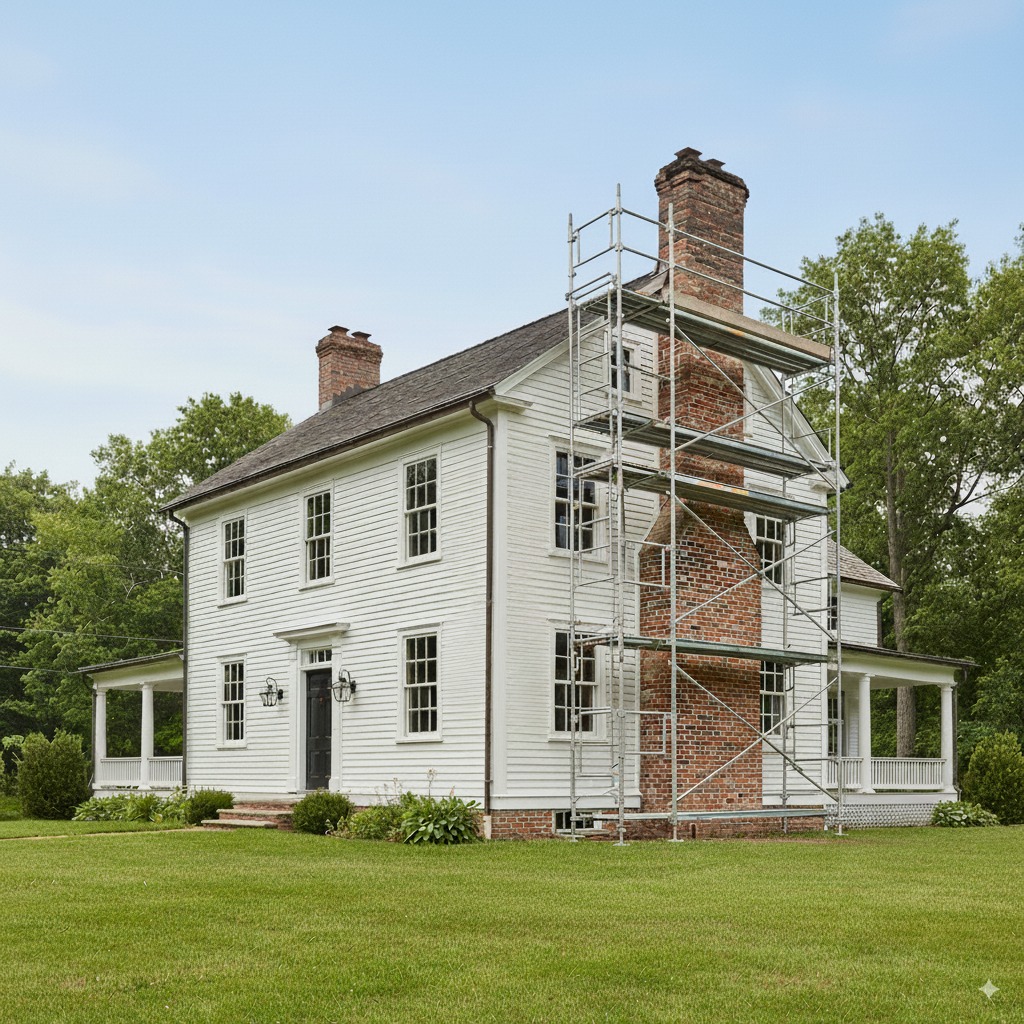
 You find the historic home of your dreams— a picture-perfect Victorian on a charming main street. Everything seems perfect–until you open the walls, where a tangled mess of electrical wires makes you want to run away screaming. Old houses hide surprises, and the walls can hide unseen headaches and dangers. But you don’t need to let that scare you or deter you. With the right contractor, you can address any potential problem with craftsmanship and care. As historic homeowners, it’s best to expect the unexpected and hire an expert to help walk you through it.
What Are Common Hidden Issues In Historic Homes?
Think of walls as the “envelope” of your house. Their purpose is to protect you from the outside world, shield you from the elements and hide some of the vital systems needed to make your home comfortable and operational. However, in old houses, the walls can hide big problems. Here’s a look at some of the most common issues.
- Rotten framing from old leaks can happen for years without the homeowner being aware. They often occur near ceilings and chimneys, under windows and behind older bathtubs. Your contractor may need to open up the wall to assess the damage and find the source of the leak.
- Balloon framing: Some older homes use balloon framing, where a single stud extends from the foundation to the roofline. This is different from platform framing, where each floor is built separately. Balloon framing presents risks with both fire and water. Especially in homes with inadequate insulation, fire can get into the wall and climb the entire length of the house. Water can also travel the full length of the stud, from the roof to the foundation, creating structural problems.
- Abandoned knob-and tube-wiring: old electrical wiring is one of the most significant risks when taking on a historic home renovation. It’s one of the main reasons it pays to work with experts in the field. Knob-and-tube wiring is a 19th-century electrical technology that involves passing copper conductors through joists and studs with a ceramic tube. In some cases, it’s still live, extremely unsafe, and inaccessible to the average DIYer. It needs to be professionally removed and replaced with code-grade 21st-century wiring.
- Insect damage: We know that bugs like soft, wet wood. So a leak in the wall can mean an infestation. Termites, carpenter ants and powderpost beetles can cause extensive damage you might not even notice until it’s well underway. For example, carpenter ants can eat their way up a wall and keep going all the way up to the peak of the roof, turning wooden studs into slivers and dust.
- Underinsulated walls cause energy inefficiencies. These houses may have been “improved” over time, but they haven’t kept pace with new technology. Your home renovation is an excellent opportunity to catch up with the latest advances in insulation, including high-tech spray foam, and dramatically improve your home’s energy efficiency.
- Previous DIY “fixes” cause bigger problems, from duct tape to ductwork disasters. You’ve heard us talk about “remuddlings” in old houses, where previous owners attempt repairs over the years with varying degrees of success. Finding a remuddling situation behind a wall can range from hilarious to shocking, from a mismatched collection of wood pieces designed to provide nailing points to drywall to some serious plumbing SNAFUs.
What Can Hidden Problems Look Like In Historic Homes?
Here are just a few examples of what hidden problems can look like in historic homes–and why it pays to work with a professional team to diagnose and fix them.
Case #1: The disappearing joist.
The problem: The client’s 1905 farmhouse was missing a vital load-bearing support joist in an upstairs bathroom.
The fix: The contractor engineered a beam retrofit while salvaging and reusing the historic flooring.
Case #2: Live wires in plaster walls
The problem: The client’s 1920s colonial had a hidden, outdated electrical system behind a historic plaster wall, creating a fire hazard.
The fix: Plaster is thicker than drywall and can be harder to work with, but an experienced contractor completed a full 21st-century rewire with minimal plaster disruption.
Case #3 Chimney moisture rot
The problem: A chimney leak in a 1890s Victorian led to rotted sheathing, mold and collapsing masonry. The clients wanted to preserve their chimney while shoring up their roof’s structural integrity.
The fix: This job called for restorative masonry work from a licensed and trusted subcontractor, wood restoration to repair roof sheathing, and new metal flashing to stop the leak.
How Does Carpenter Beach Diagnose and Fix Hidden Problems?
When you work in historic restoration for decades, you develop a strong intuition when it comes to what’s going on behind the walls. You can call it a gut-check or chalk it up to experience. Regardless, when our inner voice tells us to dig deeper, we usually find something that needs to be addressed. That said, we also have a range of tools at our disposal to help our team find out what’s lurking behind the walls, including endoscopes, moisture meters and thermal cameras. When we encounter something unexpected, we understand our responsibility to communicate clearly with the client, including photo and video updates.
Behind The Walls: How Do We Reduce The Element of Surprise?
When a homeowner undertakes a historic home restoration, there’s usually a mix of excitement and trepidation. We always advise clients to anticipate surprises and unexpected plot twists. However, there are things we can do as historic renovation specialists to alleviate the element of surprise and protect clients from unanticipated costs.
- Our team’s decades of expertise and understanding of structural challenges with historic homes make it faster and easier for us to find solid solutions.
- We can generally offer detailed assessments before we start tearing down walls.
- We set out transparent contingency budgets for every client based on the scope of work and their home’s unique characteristics.
- As always, our team focuses on a profound respect for historic details, even during demolition and repair.
Why Choose Carpenter Beach?
Renovating a historic home is unpredictable. Uncertainty and surprises come with the territory, but they don’t have to turn into a nightmare. With the right team, we can handle the wildest surprises beautifully. Our ability to pivot and continue doing excellent work is a point of pride at Carpenter Beach. Our expertise and instincts honed over the decades help anticipate potential problems and make the best decisions. If you have a renovation project that has you biting your nails, let’s talk. When you’re in capable hands, even the trickiest jobs have elegant solutions.

 Carpenter Beach Construction
 Local Wood
 Premiere Electrical Services
 Beach Carpenter Properties
 Loudoun Stairs