

 Cost is almost always the first (and the last) question in a custom home project. Homeowners want to know it before they’ll take a single planning step seriously, and it’s also the hardest thing to pin down from a website or a quick phone call. A price per square foot sounds simple, but two homes built the same size in the same neighborhood can cost very different amounts once you factor in lot conditions, finishes, and systems.
For homeowners in Loudoun County planning a spring or next-year build, fall is the right time to get a real handle on budget before engaging a builder, not after. Here’s how custom home costs actually break down in Northern Virginia, and what separates a realistic number from a rough guess.
Custom Home vs. Production Home vs. Renovation: How Costs Compare in Loudoun County in 2026
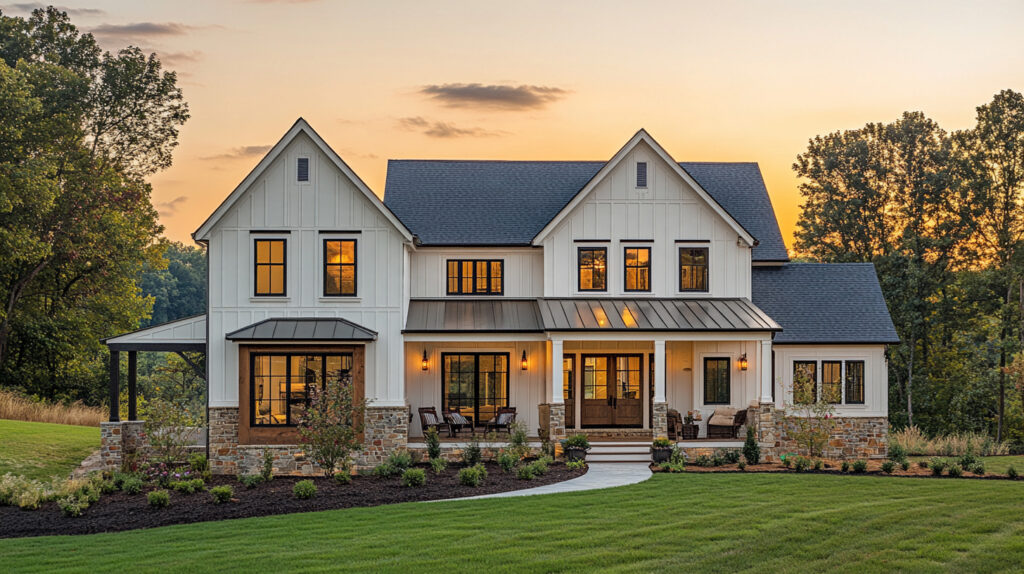 People constantly compare these three paths, and they aren’t priced the same way for good reason. A production home is built from standardized plans across a development, using the same materials and floor plans repeated many times. That repetition is what keeps prices down; builders buy materials in bulk, and crews repeat the same process on every lot.
A custom home is designed and built specifically for one homeowner, one lot, and one set of preferences. With no repetition to lean on, design time, unique material orders, and a build sequence tailored to that specific site add cost compared to a production home. In exchange, homeowners get a layout, finish level, and site-specific design that a production builder simply can’t offer.
A whole-house renovation sits in its own category. Renovation costs can rival or exceed new construction per square foot in older homes, especially historic properties, because working within an existing structure adds complexity: unknowns behind walls, systems that need full replacement, and the extra care required to preserve original character. It’s not accurate to assume renovating is automatically the cheaper option just because you’re not starting from a foundation.
What’s Included in a Per-Square-Foot Price and What Is Almost Always an Add-On?
This is where a lot of budget confusion starts. A per-square-foot number from one builder and another may measure different things, so it’s worth understanding what’s typically baked into a base price and what tends to show up separately.
A base per-square-foot figure usually covers the structural shell, framing, roofing, exterior finishes, standard-grade interior finishes, and the core mechanical, electrical, and plumbing systems. What it often does not include:
- Site work: grading, clearing, driveway, well and septic (or utility connections), and excavation, all of which vary enormously depending on the lot
- Design and permitting fees, which are sometimes bundled and sometimes billed separately
- Upgraded finishes: custom cabinetry, higher-end flooring, stone countertops, or specialty tile beyond the builder’s standard allowance
- Landscaping, outdoor living spaces, and hardscaping
- Appliances, particularly high-end packages
Asking a builder directly what’s included in their per-square-foot number, and what typically ends up as an add-on for homeowners in similar projects, is one of the most useful questions in the entire budgeting process.
The Biggest Budget Variables: Lot Conditions, Finishes, Systems, and Site Work
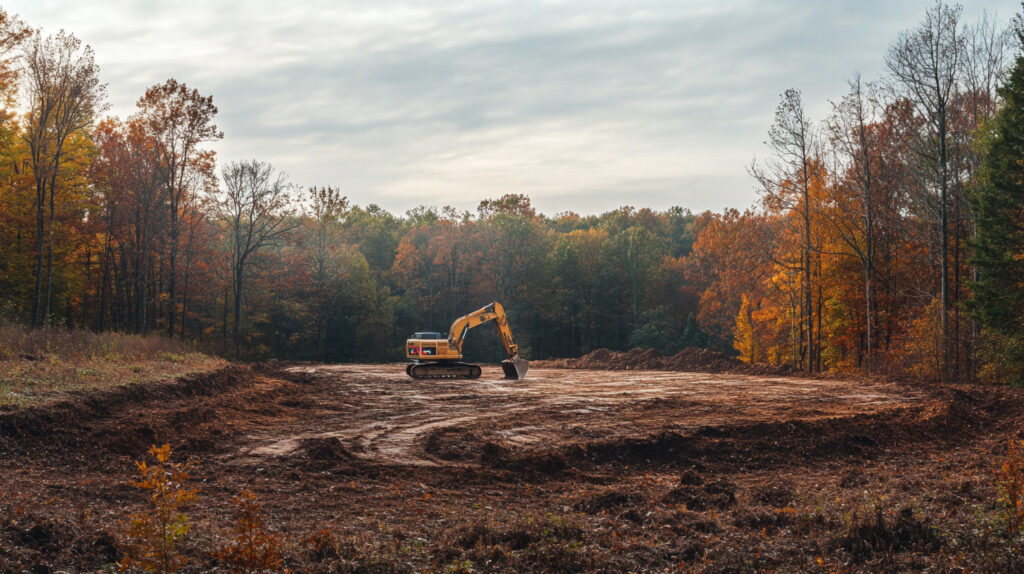 Four categories tend to move a custom home budget more than anything else.
Lot conditions. A flat, cleared, easily accessible lot with existing utility access costs far less to build on than a sloped or wooded lot that needs significant grading, tree removal, or a well and septic system. In parts of Loudoun County outside established utility service, a well and septic system alone can take up a meaningful chunk of the site budget.
Finishes. Homeowners have the most control here, and costs can swing the widest. Countertop material, cabinetry, flooring, trim details, and fixture packages can shift the total budget by a significant percentage without changing the home’s square footage.
Systems. HVAC zoning, high-efficiency mechanical systems, smart-home wiring, and upgraded electrical service all add cost beyond a builder’s standard system package. Evaluate these early, since retrofitting them after the home is finished is far more expensive than building them in.
Site work. Grading, drainage, driveway length and material, and retaining walls are easy to underestimate because they’re invisible in a floor plan. A lot that looks straightforward can still carry real site costs once you factor in drainage and grading.
How Do Contingency Budgets Work in Custom Builds, and How Much Should Be Set Aside?
 Every custom build should carry a contingency, a portion of the budget set aside for the unexpected, rather than treating the initial estimate as a hard ceiling. Even with careful planning, custom construction involves variables you can’t fully know until work is underway: what you find during excavation, a shift in material costs between signing the contract and ordering, or a homeowner’s decision to upgrade a finish partway through the build.
A reasonable contingency is typically discussed as a percentage of the total project cost, set aside to absorb these changes without derailing the schedule or forcing a homeowner into a difficult mid-build decision. A builder who talks through contingency planning up front, rather than glossing over it, generally gives a more honest picture of what the project will actually involve.
What’s the Difference Between Fixed-Price Contracts vs. Cost-Plus Contracts? What Does Each Mean for the Homeowner?
The contract structure affects how the homeowner and builder share budget risk, and it’s worth understanding the difference before signing anything.
A fixed-price contract sets a total price upfront based on the agreed plans and finish selections. This gives homeowners cost certainty, but it depends heavily on how detailed the plans and selections were when signing. Changes after the fact are typically handled through change orders, which can add costs beyond the original amount.
A cost-plus contract bills the homeowner for actual costs plus an agreed builder fee or percentage. This offers more flexibility for homeowners who haven’t finalized every selection before breaking ground, since they can make decisions along the way, but it offers less upfront budget certainty and requires more trust in the builder’s cost transparency.
Neither structure is inherently better; each suits different homeowners and varying levels of design certainty at the start of the project. What matters most is understanding which one is being proposed and what it means for how changes and overages are handled.
What Should a Transparent Custom Home Builder’s Proposal Look Like?
A proposal that’s easy to compare against others, and easy to trust, tends to share a few characteristics:
- A clear breakdown of what’s included in the base price versus what’s allowance-based or an add-on
- Defined allowances for finishes like flooring, countertops, and fixtures, rather than vague references to “standard” materials
- An explicit site work estimate based on the actual lot, not a generic placeholder
- A stated contingency approach and how change orders are priced and approved
- Clarity on the contract type, fixed-price or cost-plus, and what that means for how the final number could move
A proposal missing most of these details isn’t necessarily dishonest, but it means more of the real cost picture will emerge later in the process rather than upfront, making it harder to plan accurately.
Planning a Realistic Budget
A per-square-foot number is a useful starting point, but it’s only a starting point. Homeowners who get the most accurate budgets ask what’s included, understand their lot’s specific site conditions, decide early how much flexibility they want in finish selections, and understand the contract structure they’re signing.
Carpenter Beach Construction builds custom homes throughout Northern Virginia and works with homeowners during the planning stage to create a realistic, transparent budget before ground is broken, accounting for the specific lot, desired finish level, and site work involved. Thinking of building or renovating? Reach out and let’s start the conversation.

 Carpenter Beach Construction
 Local Wood
 Premiere Electrical Services
 Beach Carpenter Properties
 Loudoun Stairs