
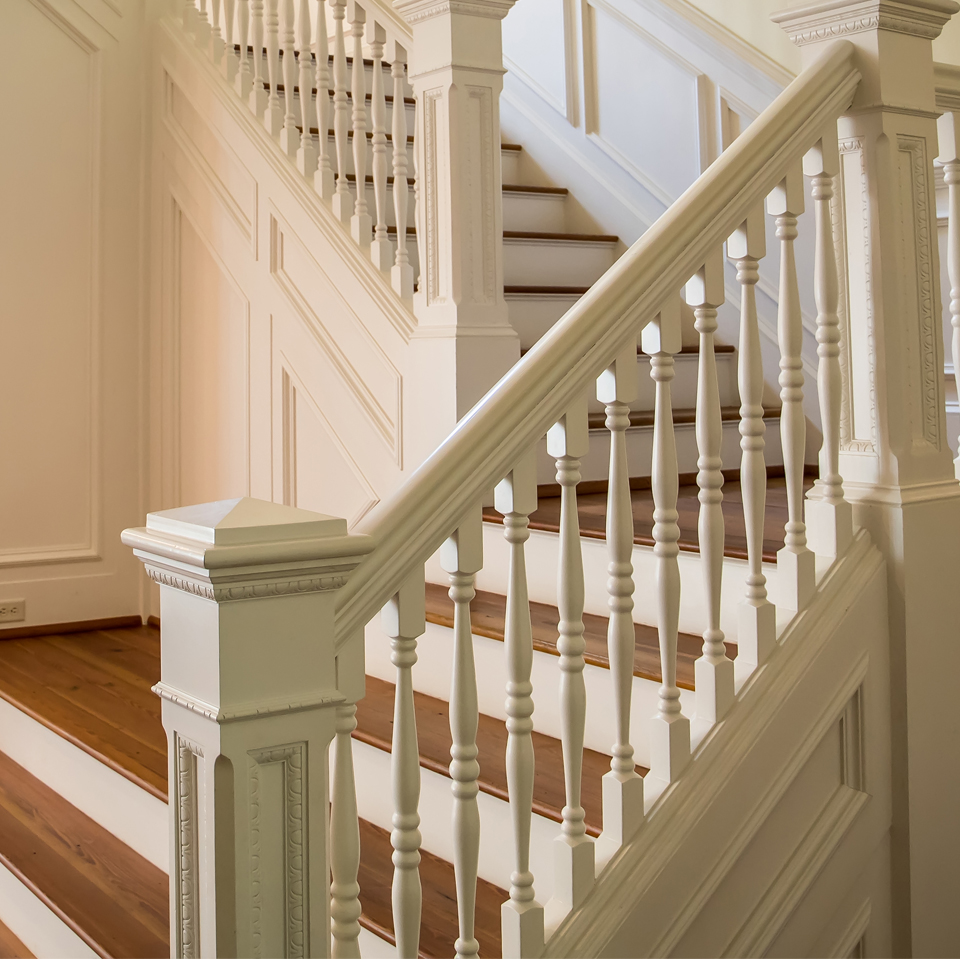
 A staircase does more work than almost any other feature in an older home. It carries foot traffic every day; it anchors the entry or the center hall; and in many historic homes in Northern Virginia, it’s one of the last original pieces of craftsmanship still standing. So when that staircase starts to show its age, the question homeowners ask is fair: is this something worth saving, or is it time for something new?
The honest answer is that it depends on the staircase, not the house’s age. Some staircases from the 1920s are structurally sound and just need attention. Others have been through enough remodels, water damage, or poor repairs that restoration would cost more than it’s worth. Here’s how to think through that decision, and what each path actually involves.
What Makes an Original Staircase Worth Restoring
The first thing to look at isn’t cosmetic; it’s structural. A staircase with solid stringers, intact treads, and framing not compromised by moisture or termite damage is usually a strong restoration candidate, even if it looks rough on the surface. Cracked plaster around a stairwell or worn finishes don’t tell you much about what’s underneath.
Character is the second consideration. Original staircases in older Loudoun County homes often feature details that are genuinely difficult and expensive to replicate today: hand-turned balusters, curved or volute newel posts, tight mortise-and-tenon joinery, and wood species that aren’t commonly milled anymore. If a staircase has that kind of craftsmanship, restoring it usually preserves more value, both in character and in resale, than starting over.
Construction quality matters too. Staircases built before mass production tended to use solid wood throughout, joined with methods built to last generations. That’s part of why so many still stand after 80 or 100 years. A staircase built this way, even with visible wear, is often a better restoration candidate than it looks at first glance.
Common Staircase Problems in Older Homes
 A few issues show up again and again in historic homes:
Loose or missing balusters. Wood shrinks and expands over decades of seasonal humidity changes, and the small dowels or pins holding balusters in place eventually work loose. This is usually repairable without replacing the whole run.
Sagging or springy treads. This can mean the tread itself has worn thin, or it can point to a structural issue in the stringer or the framing underneath. It’s worth having someone identify the cause before choosing a fix.
Inadequate railings. Many older staircases were built to standards that don’t meet current code, particularly railing height, baluster spacing, and graspability. This is one of the most common reasons a restoration project also involves some rebuilding, since a stair that’s otherwise sound may still need railing work to be safe and code-compliant.
Code compliance gaps. Beyond railings, older stairs sometimes have rise and run measurements, headroom, or landing dimensions that don’t match current building code. In a straightforward restoration, this usually isn’t an issue since you’re not altering the structure. It matters when a renovation changes the stairway’s footprint or when a homeowner brings a space up to code as part of a larger addition or renovation.
The Restoration Process
 When a staircase is a good candidate for restoration, the process usually starts with a full assessment of the structure, not just the visible finish. That means checking stringers, treads, risers, and the connection points at the top and bottom of the run before any cosmetic work begins.
From there, restoration typically involves:
- Repairing or replacing individual damaged components, like a cracked baluster or a worn tread, while matching the original wood species and profile as closely as possible
- Re-securing loose joints and tightening the structure so the staircase doesn’t creak, sway, or shift underfoot
- Stripping old finishes and refinishing to match the home’s original character, or updating the finish while keeping the original wood
- Addressing safety and code issues, like railing height or baluster spacing, in a way that respects the original design rather than covering it up
Loudoun Stairs, a sister company of Carpenter Beach Construction, has built and restored staircases in Northern Virginia for nearly 40 years, and that long-term experience matters here. Matching an original profile, replicating a hand-turned newel post, or figuring out how a 1930s stair was actually assembled takes a different skill set than standard new construction. It’s a big part of why staircase restoration tends to be a specialized trade rather than something folded into general renovation work.
When Replacement Makes More Sense
Restoration isn’t always the right call, and there’s nothing wrong with recognizing that. A few signs point toward replacement:
- Structural damage from long-term water exposure, rot, or pest damage that goes beyond what can be repaired
- Previous renovations that already altered or removed most of the original material, so there’s little historic fabric left to preserve
- A layout that doesn’t work for how the home is being used now, particularly in a renovation that’s opening up floor plans or adding square footage
- A homeowner who wants a different style or a different location for the stairway as part of a broader remodel
When replacement is the direction, a custom staircase offers homeowners far more flexibility than a stock option. Wood species, baluster style, railing design, and even the shape of the staircase itself – straight run, winder, or curved – can all be built to match the home’s architecture rather than forcing a generic design into an older floor plan.
How Staircase Work Fits Into a Larger Renovation
 Staircases rarely exist in isolation. They’re tied into flooring, wall framing, and often the overall flow of a home, so staircase work is frequently part of a bigger renovation rather than a standalone project. This is where having a general contractor and a staircase specialist working from the same plan makes a real difference.
Carpenter Beach Construction manages the full scope of historic renovations and whole-house projects across Northern Virginia, and coordinates staircase work directly with the broader construction timeline. That matters for sequencing, since a staircase installation or restoration often needs to happen at a specific point in a renovation, not too early, when surrounding framing might still change, and not so late that it holds up finish work like flooring or trim. It also matters for consistency that the staircase’s finish, wood species, and style match the rest of the home rather than feel like a separate project.
What It Costs in Northern Virginia
Pricing for staircase restoration or replacement varies widely by scope, so it’s worth understanding the general ranges before getting a specific quote.
Restoration projects tend to be less expensive than full replacement when the underlying structure is sound, because the cost is concentrated in repairs and refinishing rather than in fabrication. Simpler repairs, like tightening a run of balusters or refinishing treads, sit at the lower end. More involved restoration, such as replicating custom millwork or repairing structural elements, costs more and takes longer.
Replacement costs depend heavily on complexity. A straight staircase with standard balusters and railings costs less than a curved or winder staircase with custom millwork, hardwood species upgrades, or ironwork. Material choice also makes a real difference, since oak, maple, and specialty woods all have different price points.
The most reliable way to get an accurate number is a direct assessment, since photos and general descriptions only tell part of the story. A structural issue that isn’t visible from the top of the stairs can significantly change the scope.
Making the Call
If there’s one thing to take away, it’s that the decision between restoring and replacing a staircase comes down to what’s actually there, not how old the house is or how worn the staircase looks on the surface. A staircase with good bones and original character is usually worth saving. One that’s been compromised structurally, or has already lost most of its original material through past renovations, might be better served by a custom replacement built to match the home.
Either way, it’s worth having someone inspect the structure before deciding. Carpenter Beach Construction and their sister company, Loudoun Stairs, work together on exactly this kind of project throughout Northern Virginia, from historic homes in downtown Leesburg to older properties throughout Loudoun County, and can walk through what’s realistic for a specific staircase and a specific home.

 Carpenter Beach Construction
 Local Wood
 Premiere Electrical Services
 Beach Carpenter Properties