
 “Fine renovation” gets used loosely in the construction world, and homeowners are right to wonder whether it’s a meaningful distinction or just a marketing term. In practice, it describes something real: craftsmanship, material quality, and project management that separate a true renovation partner from a general contractor handling a standard remodel.
For homeowners in Loudoun County with a 1990s or 2000s home, not a historic property, this distinction matters more than it might seem. A well-built newer home still deserves the same care and precision as a historic one during a renovation. Here’s what actually separates fine renovation from a standard remodel, and how to know which one a project needs.
What “Fine Renovation” Actually Means
At its core, fine renovation is defined by three things: the quality of materials used, the level of craftsmanship applied, and how closely the project is managed from start to finish.
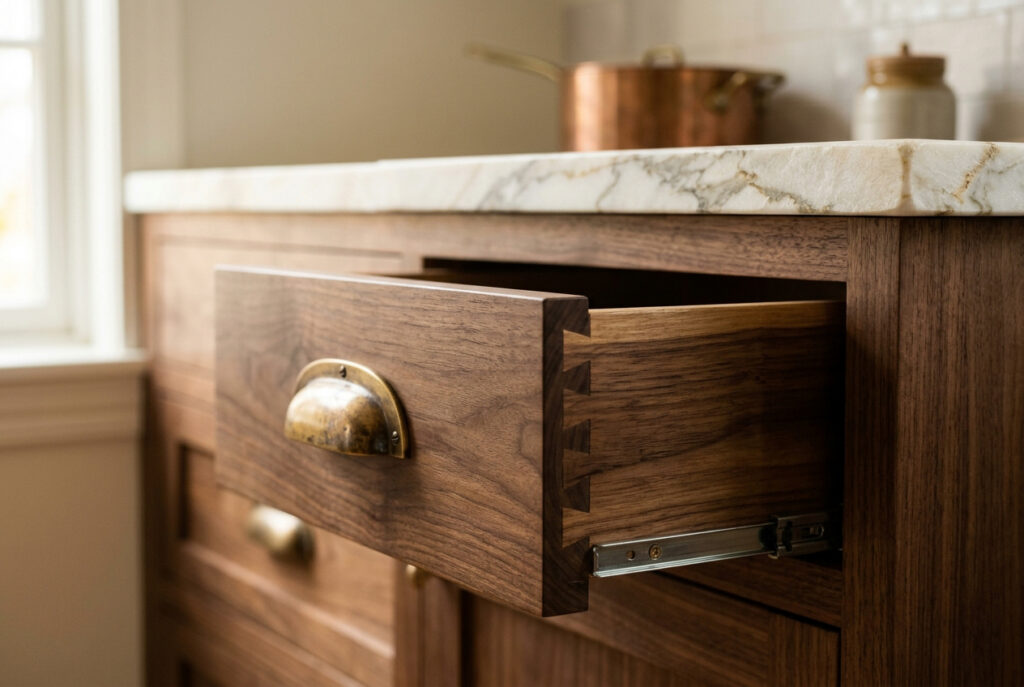
Material quality shows up in details that aren’t always visible at first glance: solid wood versus veneer, full tile versus a thin composite, hardware that’s built to last decades rather than a few years. Craftsmanship shows up in the fit and finish: how cleanly trim meets a wall, how flush cabinetry sits, whether transitions between materials look intentional or improvised.
Project management is often the most overlooked piece. A fine renovation is coordinated tightly, with trades sequenced properly and a single point of accountability, rather than a series of subcontractors working somewhat independently and hoping things line up.
Kitchen and Primary Suite Renovations: The Most Transformative Projects
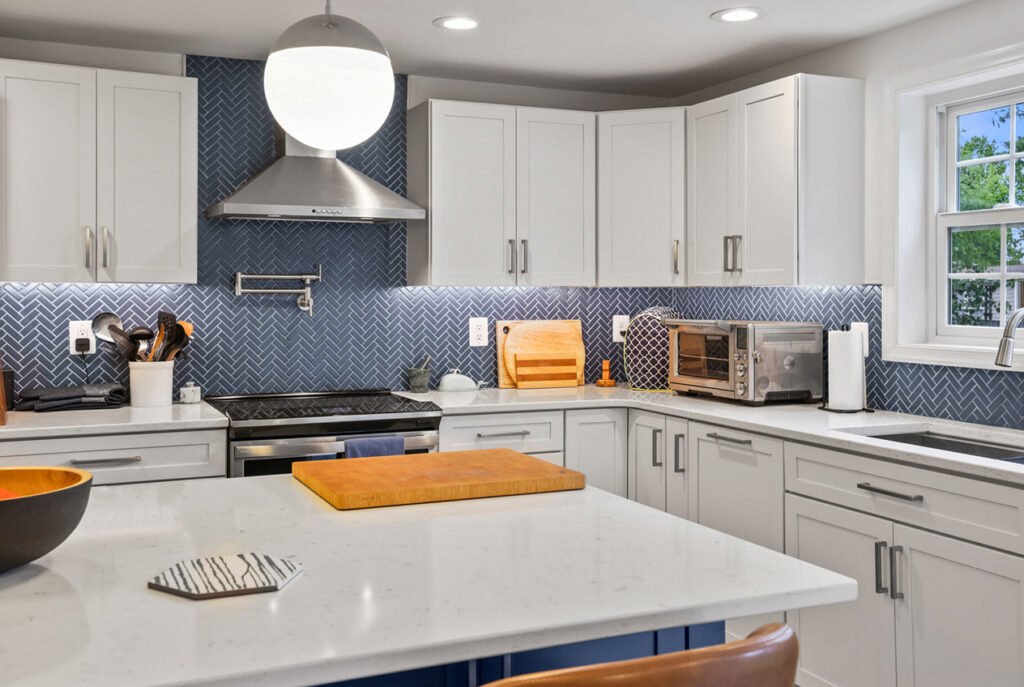 In a non-historic home, kitchens and primary suites tend to deliver the most noticeable transformation, and they’re also where the fine-versus-standard distinction shows up most clearly.
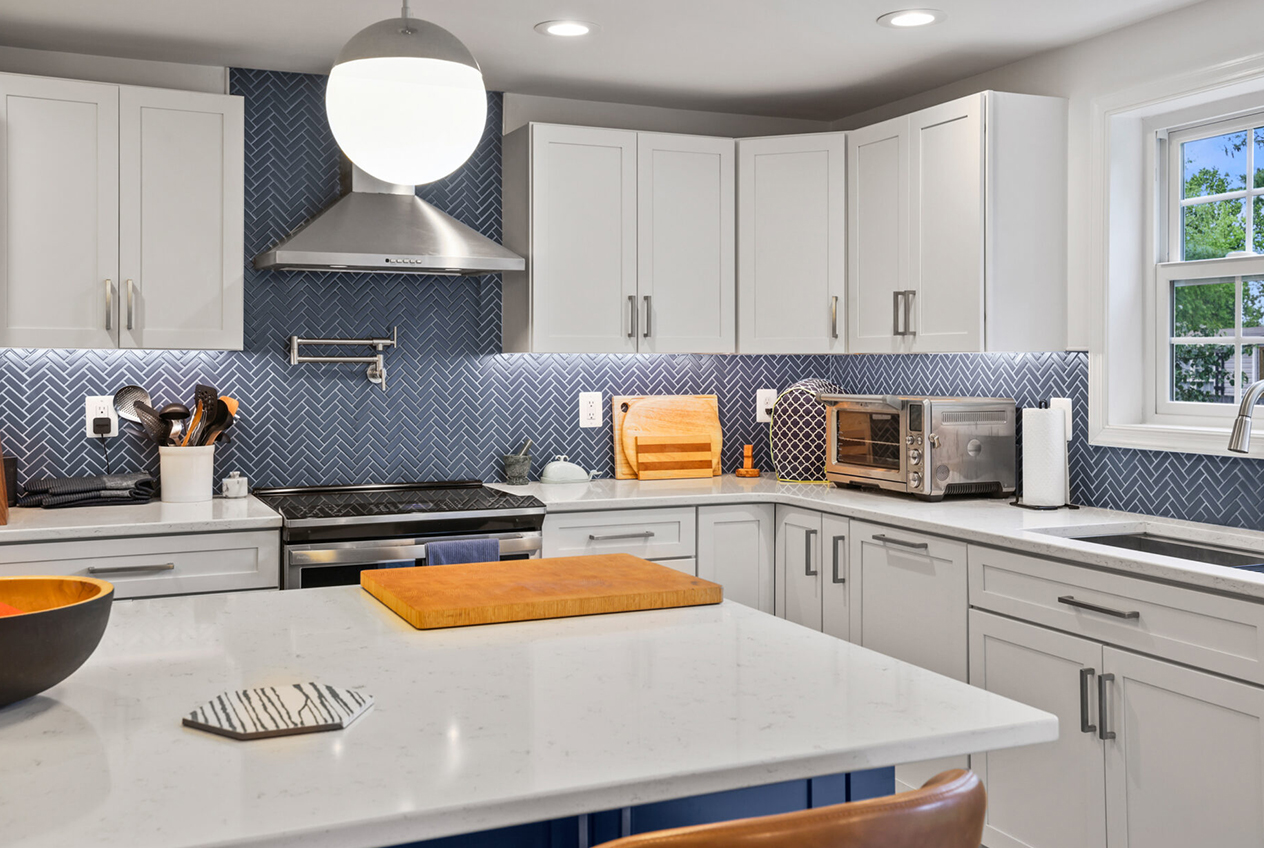
A standard kitchen remodel might swap cabinets and countertops within the existing footprint. A fine renovation looks at the whole space: whether the layout actually serves how the homeowner cooks and entertains, whether moving a wall or reworking the island opens up better flow, and how lighting, finishes, and hardware work together as a cohesive design rather than a collection of upgraded parts.
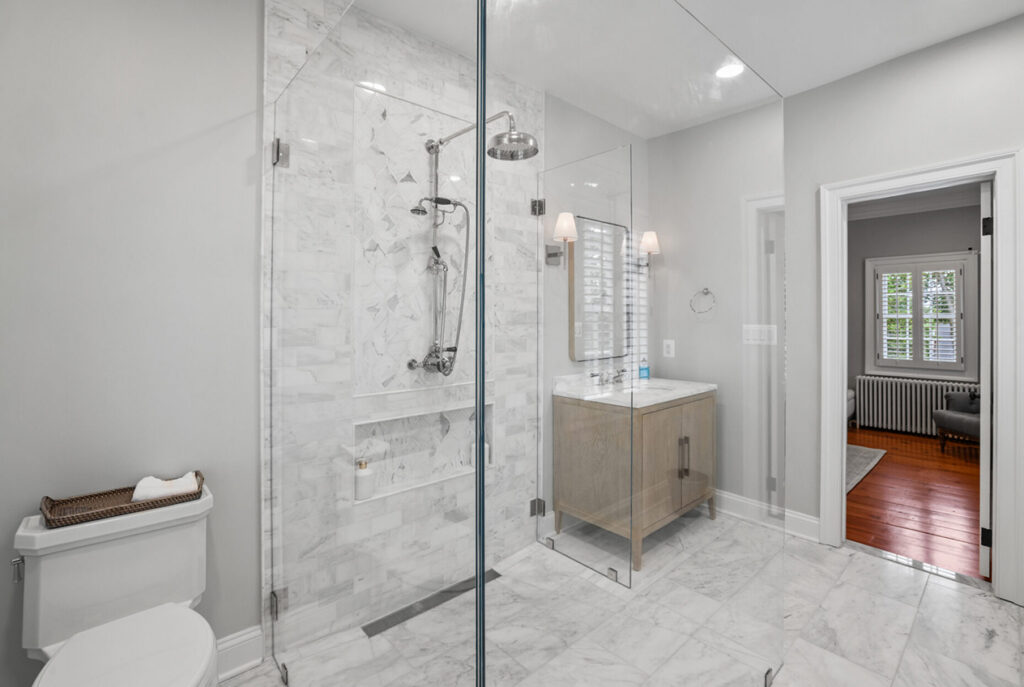
Primary suites follow a similar pattern. A standard remodel might update a bathroom’s fixtures and tile. A fine renovation considers the whole suite together- bedroom, closet, and bath- as one connected space designed around how the homeowner actually lives.
Design-Build vs. Architect-First-Then-Bid: Which Works Better for Whom
Homeowners generally have two paths for a significant renovation, and each comes with real trade-offs.
Architect-first, then bid means hiring an architect to develop full plans, then soliciting bids from multiple contractors to build those plans. This can produce highly detailed, customized design work, but it separates design from construction, so cost realities sometimes surface only after plans are finished, and the homeowner handles coordination between the architect and builder.
Design-build keeps design and construction under one roof, or at least one coordinated team, from the start. Cost feasibility gets checked throughout the design process rather than after the fact, and there’s a single point of accountability for the finished result. This tends to work well for homeowners who want a smoother process and are comfortable trusting one team through the whole project.
Neither approach is universally better. A highly complex or architecturally ambitious project might benefit from a dedicated architect’s involvement. A renovation focused on quality execution within a clear scope often moves faster and more predictably under design-build.
What Whole-House Renovation on a 1990s or 2000s Loudoun County Home Typically Involves
Homes from this era are structurally solid but often show their age in specific ways: builder-grade finishes that were standard 20 to 30 years ago, layouts that feel closed off compared to how people want to live now, and systems approaching the end of their useful life.
A whole-house renovation on a home like this usually addresses a combination of open-concept layout changes, particularly connecting kitchens to living spaces, updated systems including HVAC, electrical, and plumbing where original components are aging out, and a full finish-level upgrade across flooring, trim, cabinetry, and fixtures to bring the home in line with current expectations.
The scope varies significantly from project to project, but the common thread is treating the home as one connected renovation rather than a series of disconnected room updates.
How to Evaluate a Renovation Contractor’s Portfolio When the Work Is Inside the Walls
 This is one of the harder parts of vetting a renovation contractor, since so much of what makes a renovation well-built- framing, structural work, systems integration- isn’t visible in a finished photo.
A few things are worth asking about directly: how the contractor handled unexpected issues discovered mid-project, since something is almost always found once walls are opened; how they sequence trades to avoid rework and delays; and whether they can speak specifically to structural or systems decisions on past projects, not just finish selections. A contractor who can walk through the reasoning behind a past project’s structural choices, not just show you the after photos, is usually a stronger signal than the portfolio alone.
Why High-End Renovations in Loudoun Require a Builder With Subcontractor Relationships Already in Place
 Fine renovation work depends heavily on skilled trades, finish carpenters, tile setters, cabinetmakers and electricians who do detailed work well. In a market like Loudoun County, where demand for renovation work is strong, builders who consistently deliver high-quality results usually have established relationships with the best trades in the region.
Those relationships matter for two reasons: reliable scheduling, since subcontractors prioritize builders they work with regularly, and consistent quality, since a builder who works with the same trades repeatedly knows exactly what they’ll deliver. A builder scrambling to find available subcontractors project to project creates real risks to both timeline and quality.
Choosing the Right Fit
The line between a standard remodel and a fine renovation isn’t really about budget; it’s about intent. A standard remodel updates what’s there. A fine renovation asks whether the space is working as well as it could, then builds toward that answer with quality materials, careful craftsmanship, and a team that manages the whole project as one connected effort.
Known for historic restoration, Carpenter Beach Construction also brings thoughtful planning and quality craftsmanship to fine renovations of non-historic homes throughout Northern Virginia. Our design-build approach and long-standing relationships with trusted subcontractors help ensure a smooth, well-coordinated process from start to final walk-through.
Have a renovation in mind? Let’s talk about your project.

 Carpenter Beach Construction
 Local Wood
 Premiere Electrical Services
 Beach Carpenter Properties
 Loudoun Stairs